The Supreme Court Reaffirms Birthright Citizenship — but Trump's Immigration Machinery Stays in Place
Dorian Kantor and Istiak Ahmed
Click here to download the entire analysis in English in PDF format.
The Spanish version of this article appeared in El Espectador.
Bottom line. The Court closed the one immigration route the Constitution forbids — redefining birthright citizenship by executive order — while leaving intact the administrative levers through which the executive is already contracting who reaches the United States.
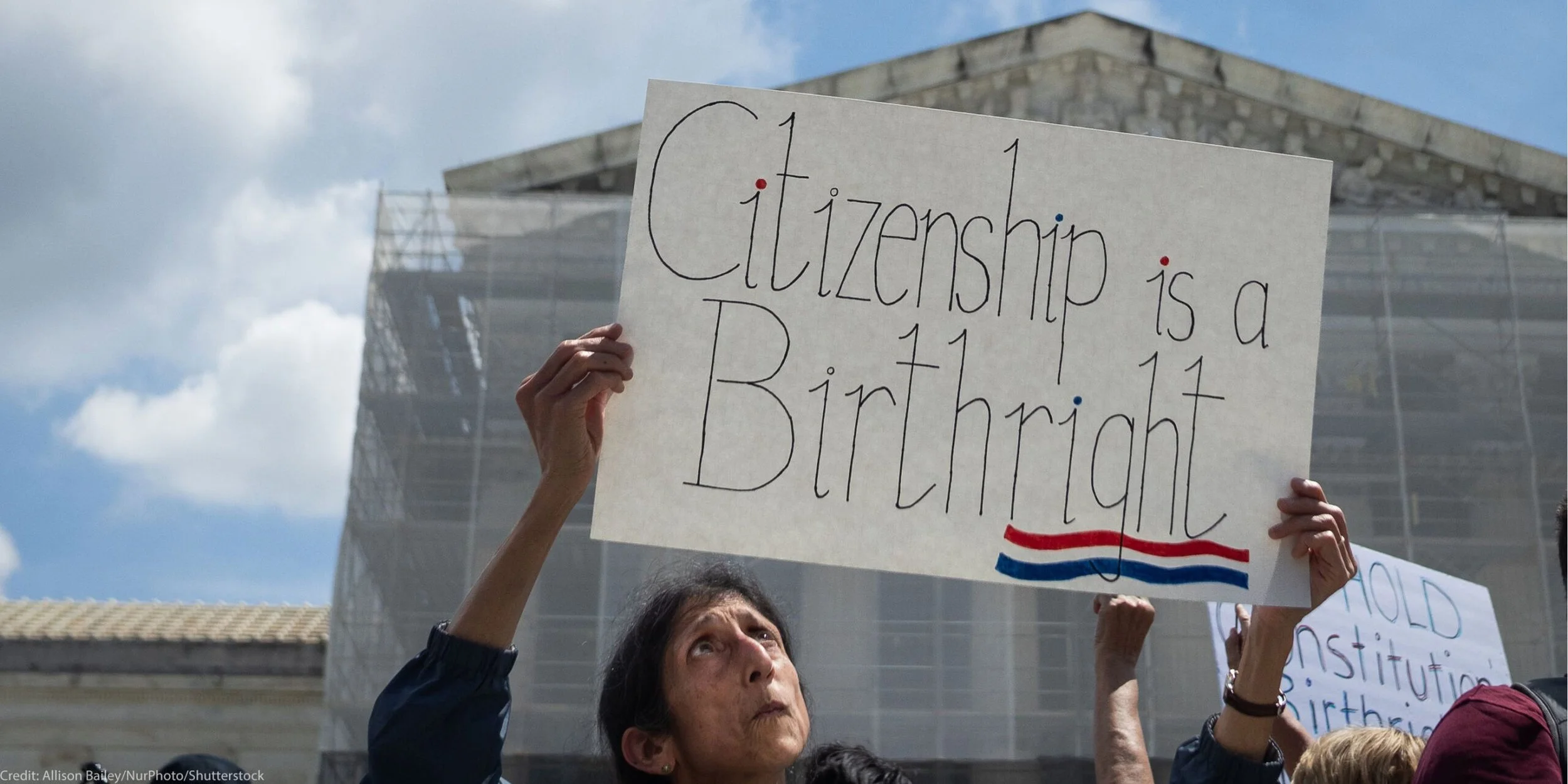
In Trump v. Barbara, the Supreme Court rejected the executive order that sought to read children born in the United States to unlawfully or temporarily present parents out of the Fourteenth Amendment's Citizenship Clause. The question was whether a president can reinterpret the Clause by order alone; the Court said no. Its weight runs past immigration to the boundaries of presidential authority: the executive cannot unilaterally redefine a right written into the Constitution.
What's happening
Chief Justice Roberts's majority reaffirmed that children born on U.S. soil are citizens because they are "subject to the jurisdiction" of the United States, grounding jus soli in the common law and in United States v. Wong Kim Ark (1898). Parental status does not control. The dissent read "subject to the jurisdiction" more narrowly and warned of incentives for "birth tourism." The decisive move is a line the Court drew: citizenship is constitutionally protected, while border enforcement, asylum, visa administration, and deportation remain within executive discretion.
Why it matters
Barbara is an exception, not a reversal. In a parallel line of cases the Court has sided with the administration — upholding TPS termination for Syria and Haiti (~355,000 beneficiaries) in Mullin v. Doe, backing asylum metering at the U.S.–Mexico border in Mullin v. Al Otro Lado, and clearing third-country deportations and the revocation of Venezuelan TPS through emergency rulings. One constitutionally barred route is closed; the machinery for throttling immigration — TPS, the $100,000 H-1B fee, the seven-figure EB-1/EB-2 requirement, asylum and refugee limits — is untouched. The costs travel outward: a weakened Western migrant-protection regime, a talent-competition opening for the EU and China (Germany's Skilled Immigration Act), and sharper exposure for Latin America, where TPS terminations threaten remittance flows that are macro-critical in Haiti, Venezuela, and the Northern Triangle.
What to watch
The next disputes move off birthright citizenship and onto asylum policy, deportation authority, and the reach of executive discretion. Watch for further TPS terminations, any congressional attempt at statutory reform, and whether skilled-migration flows actually redirect toward Europe and China as the cost of U.S. entry climbs.