Reorganized, not dismantled: the authoritarian pact in post-Maduro Venezuela
by Leonardo Carreño, Juan Diego Cubillos, and Dorian Kantor
You can read the original article in Spanish on the website of El Espectador.
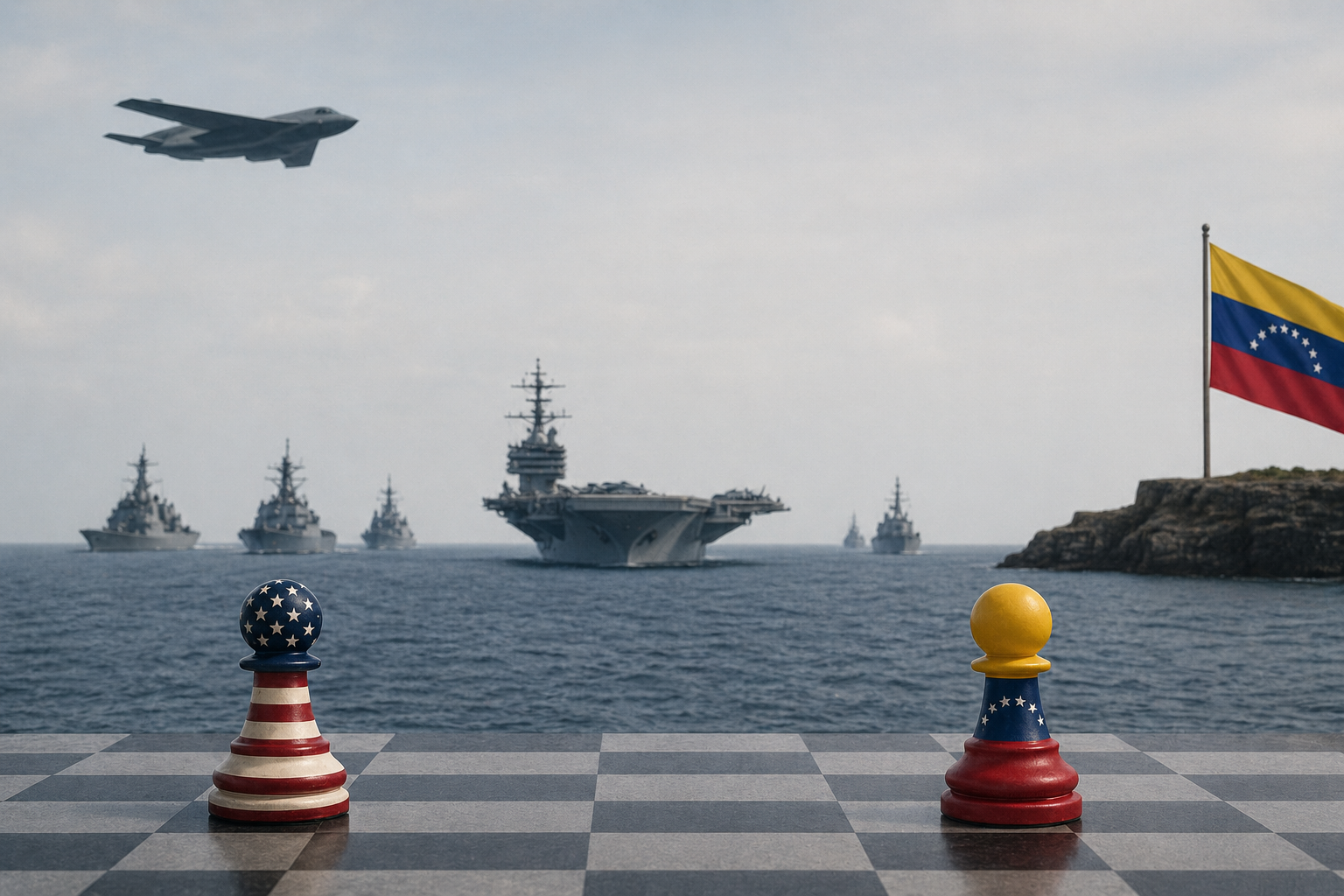
Trump framed Operation Absolute Resolve — the January 3, 2026 military intervention — as a counternarcotics operation, declaring fentanyl a weapon of mass destruction and invoking the 2001 Authorization for Use of Military Force. The legal architecture was in place. The factual predicate was not. A December 2025 Government Accountability Office report had already concluded that Mexican cartels, not Venezuelan ones, are responsible for virtually all illicit drug flows into the United States. The Maduro indictment, filed in a New York federal court, does not mention fentanyl once. The public justification and the documented record point in different directions.
What the intervention actually produced is best understood not as a democratic liberation but as a transactional arrangement — one in which the United States secured access to Venezuela's energy resources, restructured its hydrocarbons sector, and managed the transition in collaboration with key figures from the regime it displaced. On January 20, the interim government of Delcy Rodríguez confirmed receipt of the first $300 million under a bilateral oil supply agreement. Days later, Rodríguez promulgated a reform to Venezuela's hydrocarbons law opening production to private and foreign companies, dismantling one of the foundational pillars of the Chavista model. By February, Energy Secretary Chris Wright was reporting sales exceeding $1 billion. A substantial portion of those revenues was deposited into accounts overseen by the U.S. Treasury and funds held in Qatar — to finance humanitarian aid and reimburse Washington for the costs of the operation. Venezuela's petroleum wealth is being managed in venues where Venezuelans have no voice.
The democratic deficit is equally stark. Rodríguez — who between 2018 and 2021 exercised direct hierarchical control over the SEBIN, Venezuela's political intelligence service, and whom a 2020 UN report found reasonable grounds to believe knew of arbitrary detentions and torture under her supervision — was removed from the Clinton List on April 1 and publicly praised by Trump as a "fantastic person." The Amnesty Law passed on February 19 resulted in the release of 621 political prisoners, but the legal machinery and surveillance infrastructure that enabled the repression continue to operate. Human Rights Watch warned in February that the repressive apparatus remains intact. Elections have no date. The traditional opposition has been rendered irrelevant. María Corina Machado declared on the morning of the operation that "the hour of freedom has arrived"; Trump has since publicly questioned her capacity to lead.
Maduro's trial in New York extends the intervention by other means — prosecuting the slice of his crimes that the United States can translate into an offense against itself, while leaving the broader accountability gap unaddressed. Argentina's extradition request under universal jurisdiction, centered on crimes against humanity, speaks more directly to that gap, though its prospects remain slim while Washington retains jurisdictional control.
What this moment reveals is neither a neoconservative freedom agenda nor a coherent nation-building project. It is something older and cruder — a classical exercise in hemispheric dominance recast in the language of counterterrorism and rule of law. Authoritarianism in Venezuela has been reordered, not dismantled. The Venezuelans who voted for change — and who saw in Trump a liberator — are still waiting for a liberation that shows no sign of arriving.
You can read our entire analysis in English and Spanish by clicking here.