Colombia 2026 — The Foreign Policy Stakes: Scenarios, Consequences, and Opportunities
Each candidate’s government program — whether formally published or expressed through public statements — offers a window into how their administration would approach Colombia’s principal foreign policy challenges. Below, we assess the opportunities, risks, and likely consequences that each profile presents across the key variables of U.S. relations, China engagement, regional positioning, counternarcotics policy, and migration management.
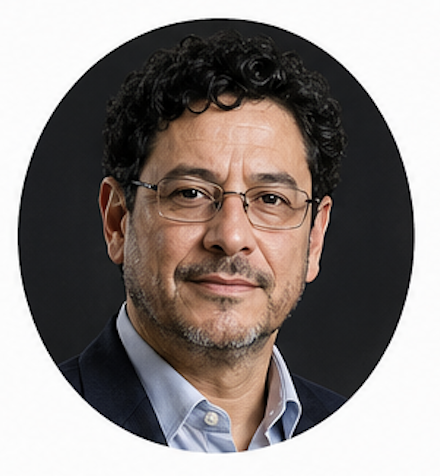
Iván Cepeda
U.S. Relations and Counternarcotics Policy
Scenarios vary considerably depending on who prevails, and the contrast is sharpest in Cepeda’s case. His opposition to Washington’s drug policy and his commitment to the Total Peace process (Paz Total) — of which he was one of the principal architects and champions — would likely sustain the current trajectory of bilateral deterioration. Maduro’s capture has further narrowed Cepeda’s pool of regional interlocutors, making a Venezuelan-mediated settlement with the ELN (Ejército de Liberación Nacional, National Liberation Army) considerably more difficult to achieve.
Under a Cepeda administration, Washington would condition any restoration of security cooperation on concrete deliverables: DEA collaboration, a militarized posture toward drug trafficking and coca eradication, and verifiable progress on interdiction. Argentina under Milei illustrates how the current U.S. administration allocates foreign assistance primarily on the basis of ideological alignment — a framework that would work against Cepeda. His realistic options reduce to two: a pragmatic accommodation with Washington that trades some strategic autonomy for logistical, military, and economic support; or a continued public rejection of U.S. interventionism, with the attendant risk of escalating economic pressure — sanctions, tariffs, or worse — as seen with Venezuela, Cuba, and Iran.
China and the Belt and Road Initiative
Cepeda would predictably deepen Colombia’s engagement with China, its second-largest trading partner. Chinese investment is already substantial — the Bogotá Metro, Zijin Mining in Buriticá, JCHX Mining in El Alacrán — and has grown consistently since before Petro took office. Colombia’s accession to the Belt and Road Initiative (BRI, or IFR — Iniciativa de la Franja y la Ruta) in May 2025 reinforces this strategic orientation. That said, Chinese investment has not always translated into guaranteed returns, owing to legal and bureaucratic obstacles that delay project execution. The Petro government designated China a reliable partner, a stance likely to unlock larger strategic projects and regulatory reforms under a Cepeda administration. The deeper structural risk, however, is that Colombia cannot be a full strategic partner to both powers simultaneously. Whichever side Cepeda tilts toward, the other will signal its displeasure by temporarily freezing assistance or investment. The question is which, and at what cost.
Regional Positioning
Building on Petro’s South-South cooperation framework, Cepeda would prioritize bodies such as CELAC (Comunidad de Estados Latinoamericanos y Caribeños, Community of Latin American and Caribbean States) and alliances with Brazil and other left-of-center governments. However, recent rightward transitions in Bolivia, Chile, and Argentina — compounded by Venezuela’s post-Maduro reconfiguration — will generate significant regional friction. Colombia would position itself as the anchor of a progressive bloc alongside Brazil and Mexico, producing tension with the Pacific Alliance and creating trade frictions in the short to medium term. The already-strained relationship with Ecuador, which recently produced a bilateral tariff confrontation, would likely escalate further. Relations with Milei’s Argentina would be minimal. The European Union represents a more stable third pillar: EU–left-government relations have not generated significant friction, and deepening those ties — particularly on energy transition, human rights, and the peace process — would be a strategic priority for a Cepeda administration.
Migration
On migration, Cepeda would prioritize the regularization and protection of Venezuelan nationals already present in Colombia — consistent with his government program’s commitment to being, by its nature, “protective of migrants.” The restoration of full diplomatic relations with Caracas could facilitate some degree of bilateral coordination on migration flows, though the political instability of Venezuela’s ongoing transition makes durable agreements difficult. Domestically, this posture may encounter resistance in communities bearing the highest costs of migration, where public sentiment has hardened since peak inflow years.

Paloma Valencia
U.S. Relations and Counternarcotics Policy
Valencia would move swiftly to restore diplomatic and political alignment with Washington, realigning extradition policy and counternarcotics cooperation with pre-Petro standards. Her security agenda — which includes a proposed 20-trillion-peso increase in the defense budget — requires substantial external financing that Colombia’s current fiscal position cannot sustain. This is where the U.S. relationship becomes indispensable. Uribismo (the political movement associated with former President Álvaro Uribe) has deep ties with key U.S. political figures, including Marco Rubio, a consistent ally of the Colombian rightsince his arrival in the Senate in 2011, as well as with influential figures in Florida’s political establishment. A Valencia government would likely strengthen Colombia’s lobbying position in Washington, unlocking security assistance and strategic investment across mining, hydrocarbons, manufacturing, and financial services, while potentially restoring Colombia’s counternarcotics certification. As a secondary effect, credit rating agencies — Fitch, S&P, and Moody’s — would likely upgrade Colombia’s outlook over the medium term, provided fiscal discipline is maintained.
This alignment would also draw Colombia into emerging regional security architectures being advanced by the Trump administration — including proposed frameworks such as the Shield of the Americas and the Board of Peace, both still at the proposal stage with limited multilateral buy-in.
China
Under Valencia, the relationship with China would be managed pragmatically — commercially active but politically distanced. This places the BRI inheritance at risk: Valencia may seek to unwind the agreement or pursue alternatives, both costly options. Washington would likely pressure her government to take an explicit position distancing Colombia from China as a strategic partner. The most immediate consequence would be a contraction in Chinese investment in infrastructure and mining — projects whose costs the state cannot absorb unilaterally — translating into project delays, layoffs, and tangible effects on quality of life. It is worth noting, however, that Chinese investment grew even during the Duque government, suggesting that commercial pragmatism may outlast political signals.
Regional Positioning
The Pacific Alliance and the Lima Group would anchor Valencia’s regional cooperation strategy. Colombia would reactivate these frameworks and distance itself pragmatically — though not definitively — from bodies such as CELAC, UNASUR (Unión de Naciones Suramericanas, Union of South American Nations), and the CAN (Comunidad Andina, Andean Community). The broader context is a regional rightward realignment: under Valencia, Colombia would join a bloc of ideologically aligned governments — Ecuador, Argentina, Chile, Panama, El Salvador — that Washington would actively support. This bloc would coordinate on shared priorities including counternarcotics cooperation, migration management, and energy security, the last of which has become more urgent given global supply chain disruptions from the Iran conflict, which has affected not only oil markets but industrial and transport inputs more broadly. Tensions with Lula’s Brazil would be probable. Domestically, Valencia would govern a divided country: polling currently shows sustained support for the left, with Cepeda leading in voting intention. Terminating Total Peace and adopting a militarized approach to non-state armed groups would generate significant social unrest — echoing the pattern seen in Argentina under Milei, where social spending cuts have triggered sustained street mobilization. A newly reconfigured Congress with a significant left-wing contingent would further constrain Valencia’s legislative margin.
Migration
Migration would be reframed under Valencia primarily as a security and bilateral agenda item with Washington. Stricter border controls and enhanced cooperation with U.S. agencies on migration management would be expected, in line with the Trump administration’s regional priorities. The approximately three million Venezuelan nationals already settled in Colombia would face a less permissive policy environment, with fewer resources directed toward regularization and integration. While this posture may score diplomatic points in Washington and appeal to domestic constituencies frustrated by migration pressures, it risks generating new humanitarian vulnerabilities and straining service delivery in border departments.
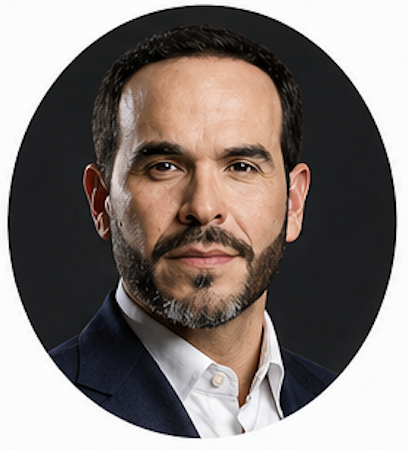
Abelardo de la Espriella
U.S. Relations and Counternarcotics Policy
De la Espriella is the candidate most fully aligned with the Trump administration. His convergence with Washington would be near-total on security, counternarcotics, and the Venezuelan question. He would pursue trade arrangements favorable to Colombia, with particular emphasis on gas supply — a resource Colombia currently faces a critical shortfall in due to insufficient upstream investment and the Petro government’s energy transition policy, which deprioritized new hydrocarbon exploration. This alignment could yield the lifting of commercial sanctions, though at the cost of significant constraints on foreign policy sovereignty.
Migration
On migration, De la Espriella’s break with Venezuela — welcomed in Washington — would predictably deepen the bilateral border crisis. The absence of diplomatic dialogue and institutional cooperation creates space for criminal organizations, including the ELN, to exploit ungoverned border zones. Venezuelan migration flows would continue and could intensify, given the persistent instability of Venezuela’s post-Maduro transition. Unlike Valencia, De la Espriella has not articulated a coherent migration management framework, raising the risk that ad hoc responses would compound rather than address the underlying pressures.
China and Multilateral Engagement
De la Espriella would pursue explicit ideological distance from China, emulating the postures of Bolsonaro and Milei. His alignment with the U.S. and Israel would entail a comprehensive review of the BRI agreement and existing mining contracts. That said, his own public statements in interviews suggest he would maintain commercial relations with China — its economic weight in Colombia is too significant to ignore entirely — while prioritizing energy, mining, and infrastructure projects with Europe, the U.S., and Israel. His proposed radical rupturism — ideological bloc formation, withdrawal from the OAS (Organization of American States) and the UN — risks diplomatic isolation and institutional crisis. Withdrawal from near-universal multilateral bodies would effectively mark Colombia as a pariah state in the eyes of most governments and investors, with lasting damage to its negotiating credibility. He has also proposed adapting El Salvador’s model to build large-scale detention facilities in Colombia following Bukele’s security playbook. Unlike Milei or Bukele, De la Espriella lacks a consolidated foreign policy team, compounding the risk of a disorderly transition.
Conclusion
The three scenarios carry differentiated risks and opportunities across the same set of variables: alignment with the United States, Chinese investment, regional positioning, counternarcotics policy, and migration management. What they share is the absence of easy options. Colombia’s structural dependencies — on Washington for security, on Beijing for infrastructure, on regional integration for trade — do not dissolve with a change of government. They are renegotiated, on different terms, at different costs, and through different windows of opportunity. The 2026 election will determine which negotiation Colombia enters, and from what position of strength.